

Menu
Before, during and after your outdoor activities, there are a few things you can do to reduce the risk of tick bites.

This section contains all you need to know about tick bite prevention. For some Canadians, enjoying nature involves protecting themselves from mosquitoes or watching out for bears. Similarly, ticks are something to be aware of, for yourself and your pets, both around your property and when participating in outdoor activities further afield.
Although the risk for ticks and diseases transmitted by ticks is present across all provinces, it does vary. Ontario, Quebec and Nova Scotia consistently report the highest numbers of Lyme disease cases in Canada.
Whether you have lived in your area for a long time, or are visiting or moving to a new area, it is a good idea to inform yourself of your regional risk level so you can take adequate measures to protect yourself while enjoying the outdoors.
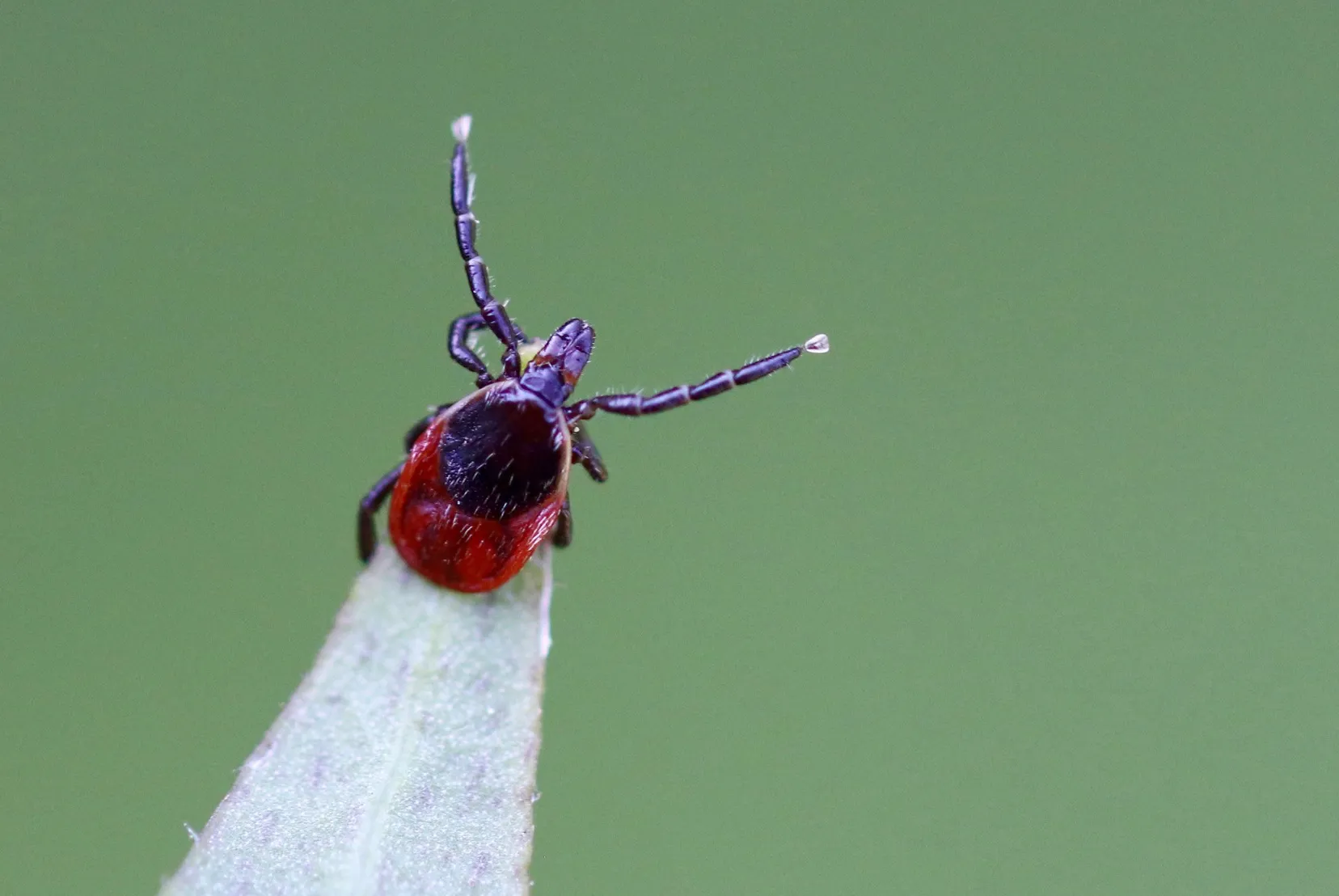
The behavior ticks use to attach themselves to an animal or host is known as questing. Using their hind legs to cling to tall foliage or grass, they extend their front legs, waiting to climb onto a passing host.
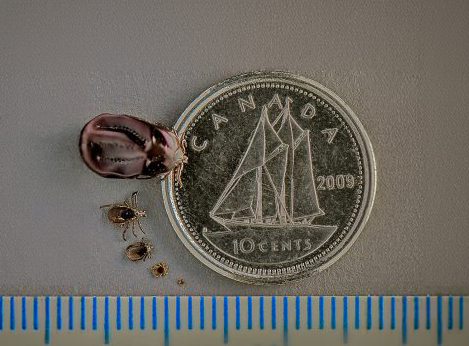
Ticks come in different sizes. The nymph life stage of a tick is as small as a poppy seed1. Look for dark or discoloured spots2 and use your hands to feel for small bumps.
It is worthwhile noting that nymphs are more active in the spring and summer, whereas adult ticks tend to be more active in the fall. Depending on your location3, it may be important to perform tick checks all year round.
Click on the following sections to learn more
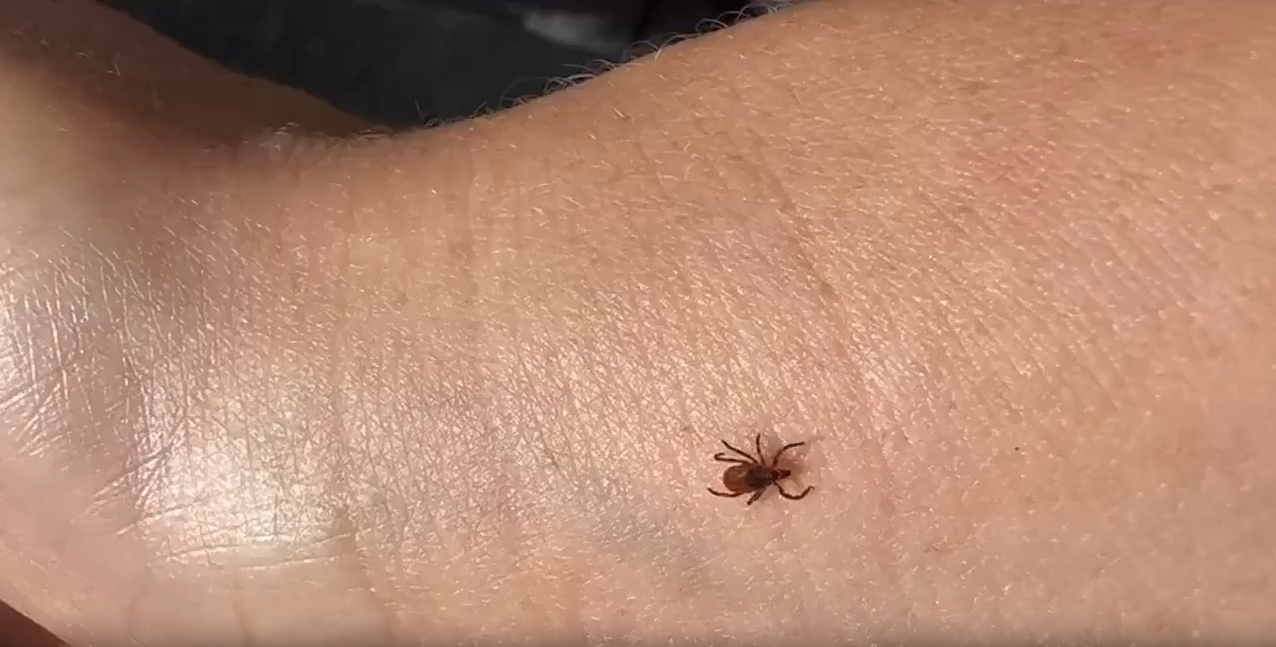
Video of an adult female blacklegged tick (Ixodes scapularis).
Ticks often move up the body (in this case an arm) looking for somewhere it can attach without being dislodged.
Watch the video
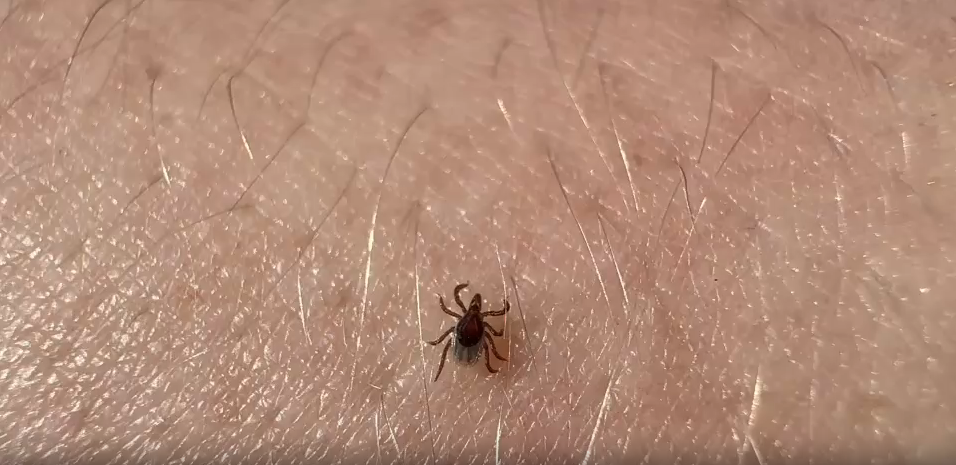
Video of a blacklegged tick (Ixodes scapularis) at the nymph stage
Ticks often move up the body (in this case an arm) looking for somewhere it can attach without being dislodged.
Watch the videoApproximately 11% of Lyme disease cases in Canada are in children aged 5-14 years. Children this age tend to play low to the ground and leave designated trails. They are also less likely to check themselves for ticks. However, it is not necessary to stop them playing outside or to reduce their interactions with nature. To protect children from tick bites, the same principles apply as for adults, with a few differences.

Choosing appropriate clothing for children is very similar to adults, with a focus on long layers, closed shoes, and tucking clothes in (pants into socks, shirt into pants).
Check the clothes intermittently as they can get untucked! Rain pants and rain suits with elasticated wrists and ankles may also help reduce exposure to ticks.
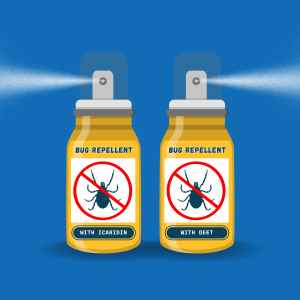
There are bug repellents suitable for children which are effective against ticks, authorized and widely available in Canada. As with adults, products containing either DEET or Icaridin are recommended and available. Click here for detailed information on how to use these repellents in different age groups.

Washing and performing a thorough tick check is important – scheduling bath-time as soon as possible after arriving back home provides a great time to do this in younger children. Key areas to check with infants and young children include the head, hair, and ears.This can be a fun and educational experience for the child, and eventually, they may offer to help check you!

For information and activities related to ticks developed for children aged 4 years+, check out Health Canada Experiences: Ticks – little bugs, big problems.

Pets are at risk for tick bites and tick-borne diseases too, particularly as they tend to run off leash and in vegetation. Lyme disease poses a risk to dogs, whereas it is extremely unlikely to occur in cats. Anaplasmosis10 is the second most common disease spread by blacklegged ticks and can affect dogs, cats, and horses, as well as humans.
There are many options available for dogs and cats, which are applied and work differently. Several products will protect your pet against other parasites too. Speak to your veterinarian to understand which product will suit you and your pet best,11,depending on where you live, your lifestyle, and your pet.
There is a Lyme disease vaccine12 available for dogs – speak to your veterinarian to find out if this is something that would benefit you and your dog.

By keeping your animal on paths and trails, and away from long grass, brush and leaf litter, you can minimise the chance of them acquiring ticks.
Similarly, there are measures you can take to reduce tick exposure on your property.

In much the same way as we should check ourselves for ticks, performing a tick check at least once per day on your pets helps keep them safe and may reduce the chance of ticks being brought into the home.
This can be tricky if your pet has long or thick hair but do the best you can to check all over your pet, including the paws, legs, belly and head, and enjoy this time with your pet!
Ticks can be removed with fine-tipped tweezers or a tick puller device. Having someone with you to hold and distract your pet may be helpful.
If you are at all concerned about identifying or removing a tick, risk of disease, symptoms, or what to monitor for, contact your veterinarian. You can also submit photos of the tick for identification to eTick.
There are many practical measures you can take to reduce the chance of tick exposure in your yard. Each measure provides an additional layer of protection, and by implementing multiple measures you can significantly reduce the presence of ticks on your property.
Keep in mind that engaging in yard work and outdoor activities is associated with an increased risk of acquiring a tick bite and a disease transmitted by ticks. So, while working on your property, remember to protect yourself and your pets and to perform a tick check when you have finished!
Based on a recent synthesis of the scientific literature, our interactive yard illustration provides information on measures you can take to reduce your risk of tick exposure on your property. Click on the elements in the illustration highlighted in white to learn about each measure.
.jpg)

For more advice on things you can do to reduce ticks around your home, you can consult. Produced by the Government of Canada.
Watch the video[1] Aussi petites que ça? Les nymphes peuvent être confondues avec des grains de beauté ou des taches de rousseur en raison de leur petite taille.
[2] Il peut être utile de disposer d'un miroir en pied, d'un miroir à main et d'un rouleau à peluches à l'endroit où vous effectuerez les contrôles. L'identification d'une tique peut être facilitée par l'utilisation d'une loupe ou la prise d'une photo numérique avec zoom.
[3] Les tiques sont généralement actives à partir de 4°C (39°F). Selon l'endroit où vous vivez, les tiques peuvent être saisonnières (par exemple, d'avril à novembre) ou être actives toute l'année.
[4] Les vêtements traités à la perméthrine offrent une protection contre les tiques et les moustiques. Ces vêtements sont utilisés par l'armée depuis plusieurs décennies et sont approuvés pour les personnes âgées de plus de 16 ans. Les vêtements traités à la perméthrine conviennent aux femmes enceintes ou qui allaitent, mais il est recommandé de ne pas les porter pendant l'allaitement afin d'éviter que les nourrissons n'entrent en contact avec le produit. Pour plus d'informations sur l'utilisation des vêtements traités à la perméthrine, consultez la page web de l'Agence de santé publique du Canada.
[5] Il n'existe pas d'insectifuge pour les bébés de moins de 6 mois. Une moustiquaire peut être utilisée comme un imperméable pour protéger le bébé (par exemple, au-dessus de la poussette ou du berceau).
[6] En général, les tiques sont actives lorsque la température est supérieure à 4°C (39°F). Cependant, il faut savoir que les microclimats locaux dans les habitats des tiques peuvent signifier que les tiques sont actives lorsque les températures ambiantes sont inférieures à 4°C.
[7] La fréquence des contrôles dépend de votre niveau de confort et de votre type d'activité. Si vous travaillez à l'extérieur toute la journée, vous pouvez choisir d'effectuer une brève vérification des tiques à chaque pause et une vérification complète à la fin de la journée. Si vous partez pour une courte randonnée, vous pouvez choisir d'effectuer un contrôle complet des tiques à votre retour à la maison. Bien entendu, vous pouvez également garder un oeil sur les tiques tout au long de l'activité.
[8] Combien de temps faut-il pour sécher des vêtements à haute température? 10 minutes: Il faudra plus de temps si les vêtements sont mouillés.
[9]Les principales zones à vérifier chez les nourrissons et les jeunes enfants sont la tête, les cheveux et les oreilles.
[10]ILe nombre de cas signalés au Canada a augmenté au cours des dernières années. La bactérie responsable de l'anaplasmose chez les humains, les chiens, les chats et les chevaux est différente de celle qui cause l'anaplasmose chez les bovins.
[11]IEn fin de compte, le produit qui fonctionnera le mieux est celui qui correspond à votre budget, que vous vous sentez à l'aise d'utiliser tout au long de l'année et que vous n'oublierez pas d'utiliser! Il peut être très utile de prévoir des rappels tout au long de l'année.
[12]eCependant, le vaccin contre la maladie de Lyme ne protège pas contre d'autres maladies émergentes transmises par les tiques. Les méthodes de prévention contre les tiques restent donc importantes.
How can I protect myself?
Protecting yourself from ticks involves a combination of simple steps to follow before, during and after outdoor activities. Whether you’re in your garden, out hiking or doing some gardening, each step plays an important role in reducing the risk of being bitten. The following recommendations will guide you through these different steps so that you can easily incorporate effective preventative habits into your daily routine.
1. Preparing before going outdoors
Choosing suitable clothing
If you have already thought about what you could wear, you won’t need to worry about it at the last minute. It is very likely that you already own the clothing you need to minimise tick exposure when outdoors:
In hot weather, light colours have the added benefit of being cooler as well as making ticks easier to spot, and looser clothes may be more comfortable.
If you choose not to wear long layers, socks and closed shoes, bear in mind that the use of other preventive measures such as bug repellent and tick checks will be even more important.
If you spend a lot of time outdoors, you may wish to investigate and invest in permethrin-treated clothing4.
Use bug repellent
Know which bug repellents are appropriate for you and your family.
There are two ingredients for tick protection recommended and authorised in Canada – DEET and Icaridine5. Ces produits sont également efficaces contre les moustiques, bien que la durée d’efficacité ne soit pas la même pour les deux. N’oubliez pas que d’autres répulsifs contre les moustiques peuvent ne pas être efficaces contre les tiques. Suivez toujours les instructions de l’étiquette pour savoir comment utiliser les répulsifs contre les insectes. Click here to find specific information about how to use bug repellents which are effective against ticks and readily available in Canada.
To increase the likelihood of remembering to apply bug repellent, it can be helpful to leave bottles in strategic places, such as by the door and in the car.
Check the weather
In general6, ticks are active when the temperature is above 4°C (39°F), therefore depending on where you live in Canada, you may need to think about tick prevention from April to November or even year-round. During the shoulder seasons, it is a good idea to check the weather forecast at the beginning of the day so you can be prepared before enjoying the outdoors.
2. While you are outdoors
Stay on the trails
Watch where you are walking !
Sticking to the paths and trails minimises tick exposure, for yourself, children, and pets. Avoid brushing up against foliage of any kind where ticks may be questing (see image 7). If you choose to walk off the trails, the use of bug repellent and other preventive measures such as periodic7 tick checks will be even more important.
Reapply bug repellent
If spending a long time outdoors, take the spray with you as it may need to be re-applied after 3-10 hours, depending on the product.
Check the label of your repellent for specific guidance.
Spread the word!
Share your knowledge of ticks and tick bite prevention and create awareness!
3. Returning home
Check clothing and equipment
Keeping a jar for ticks by the door can remind you to do this preliminary tick check before entering the house. Pay particular attention to your shoes (especially in between the laces), socks and pants.
Dry clothes
Put clothing into the dryer, on high heat, for at least 10 minutes8.
Leaving a laundry basket by the door is a good reminder to remove clothing and bring them to the dryer as soon as you are inside. Ticks die in dry conditions – not with heat – which is why putting clothing into the wash is not effective.
Shower and body check
PrTake a bath or shower and perform a thorough tick check as soon as possible after returning home.Take a bath or shower and perform a thorough tick check as soon as possible after returning home.
Key areas9 to check include the head and hair, ears, arms, chest, back, waist, belly button, groin, legs and behind knees, and between the toes, however it is important to check everywhere.